Nobody should lose their home,
their health, or their life
to a slot machine.
Casino games are wonderful — the rush of a climbing multiplier, the shared gasp at a live table, the pull of a fair bet. The games were never the problem. What the industry wraps around them is: real money, hidden odds, and a machine engineered to keep you chasing losses until something breaks. We built No More Beast to keep everything people love — and remove the one thing that ruins lives.
A world where the rush costs you nothing but a good night — and no one plays alone in the dark again.
This is what the beast does.
We’re not guessing, and we’re not exaggerating. Every number below comes from the world’s leading public-health and academic sources — tap any one to read it yourself.
Tens of millions of people are being hurt, and each of them takes about six more people down with them.3 This is not a fringe problem or a personal failing. It is a designed outcome of a trillion-dollar machine — and it is exactly the machine we set out to make obsolete.
People don’t really play for the money.
Ask people why they gamble and “winning money” isn’t even the top answer. It’s the fun. The excitement. The story you get to tell. Being in it together. The small mastery of reading a game.6 The money — and, inevitably, the losing — is the part that does the damage.
So we asked a simple question: what if you keep all the good and delete the harm? Keep the adrenaline, the live tables, the parties, the fair game, the bragging rights. Take the real-money betting out entirely — no deposits, no withdrawals, nothing to lose that was ever real. What’s left is everything people actually came for, and none of what wrecks them.
We didn’t take away the game.
We took away the gamble.
Real casino doors. Zero real stakes.
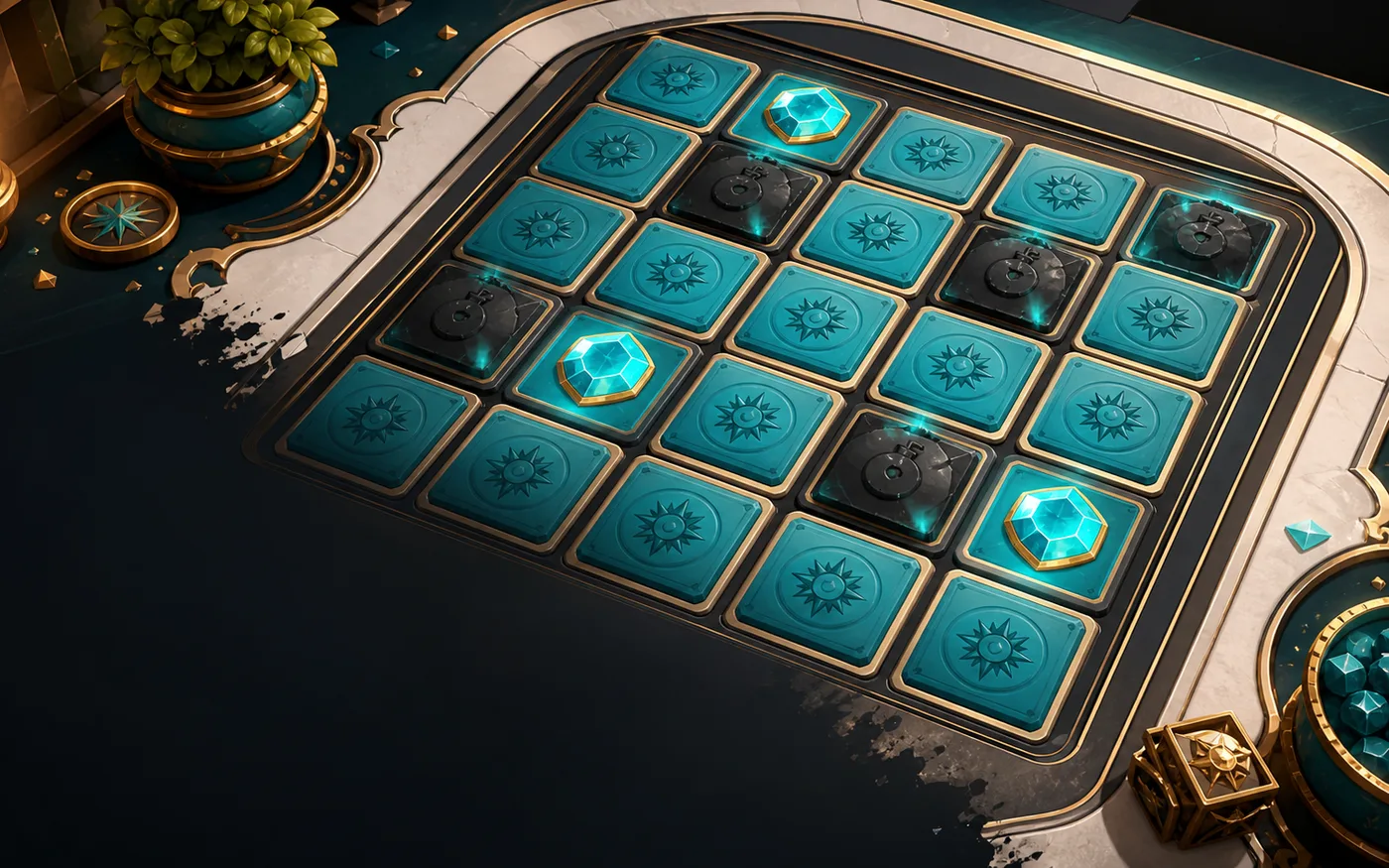
Mines, Sugar Storm, Honey Falls, live Blackjack, Beast Blast — full games with published RTP and provably fair seeds. Tap any door to learn the rules before you sign up. Same thumbs you’ll see in the hall once you’re in.





Some free casino games are just a trap with a free trial.
We’ll say it before anyone else does. Plenty of “social casino” games sell you virtual chips for real cash, let you win and lose them, and quietly walk you toward a real betting site. The research is blunt about it: spending real money on virtual credits is the single biggest predictor of someone crossing over into real-money gambling.7
So we don’t build that. Ƶ can never be bought to win money. It can never be cashed out. It is worth exactly nothing in the real world — and it always will be. We removed the one mechanism that turns a game back into a trap. If that makes us a worse business, good. That’s the whole point.
The house rules, rewritten.
Six things we’d stake the whole company on. We already have.
The thrill was never the problem.
The price was. The racing heart, the near-miss, the shared gasp — those are gifts. Losing your month’s rent to feel them is the crime.
Nobody should risk their home to feel alive.
Excitement should cost you a good evening, not your savings, your sleep, or the people who love you.
A fair game is a right, not a slogan.
Every round here is committed before you bet and provable after. You never have to trust us — you can check.
For once, the house is on your side.
We win when you have a great time and come back happy, never when you lose. That one change rewrites everything.
The best win is the one you share.
Status here is generosity, not a bigger pile. The whole point is playing together, not bleeding alone at 3am.
Fake money. Real joy. Zero ruin.
Ƶ can never be bought to win, never cashed out, never worth a cent. That’s not a limitation. It’s the entire idea.
Picture it with us.
A million people who found their rush — and lost nothing.
Game nights that end in laughter, not silence. Friends on the same live board from three different countries. A whole generation that grows up loving casino games and never once meets the beast. Every euro that would have vanished into a rigged machine, still in someone’s pocket — or spent making a friend’s night. That isn’t a pitch. It’s the plan.
It only happens if this idea travels. If it moved you even a little, do the one thing that matters: send it to a single person — someone who plays, or someone who wishes they could stop. That’s how a movement starts — one person handing it to the next.
Share this — we’d be grateful.
Awareness is the whole fight. If this matters to you, send it to one person who plays — or one who wishes they could stop. It costs you ten seconds and might change a life.
“This isn’t about me. It’s about the millions who deserve the fun without the ruin. I couldn’t fix the whole industry — so I built the one place that refuses to play its game.”
Retire the beast with us.
Ƶ500 on the house, a daily drop, a whole crew to play with — and nothing to lose but a good time.
Sources
- The Lancet Public Health Commission on gambling, 2024.
- Fiedler et al., “Gambling spending and its concentration on problem gamblers,” Journal of Business Research, 2019.
- Goodwin et al., “A typical problem gambler affects six others,” International Gambling Studies, 2017.
- University of California / USC working paper on online sports betting and household finances, 2024.
- Meta-analytic review of suicidality among people with gambling problems, 2023 (association, not causation).
- Binde, “Why people gamble: a model with five motivational dimensions,” International Gambling Studies, 2013.
- Kim et al. / Gainsbury et al. on social-casino-to-gambling migration; spending real money on virtual credits is the strongest predictor.
Figures are reported as published by their sources. Associations between gambling and mental-health harm are strong and repeatedly replicated; we describe them as associations, not simple cause and effect. If you or someone you know is struggling with gambling, help exists and it works — please reach out to a support service in your country.